Many people assume that autonomous vehicles navigate purely through their sensors—cameras, lidar, and radar scanning the environment in real-time. This intuitive understanding seems logical: if humans can drive by looking at the road, shouldn't sophisticated sensors be enough for machines? The reality is far more complex. High-definition maps have become essential infrastructure for most autonomous vehicle systems, serving roles that real-time perception alone cannot fulfill. Understanding why autonomous vehicles rely on these detailed maps reveals fundamental truths about the challenges of machine perception and the engineering solutions that make autonomous driving possible.
The Common Misconception: Sensors Are Enough
The belief that sensors alone should suffice for autonomous driving stems from how we understand human driving. We look at the road, see lane markings and signs, and navigate accordingly. Modern sensors can capture far more data than human eyes—lidar creates precise 3D point clouds, radar detects objects in any weather, and cameras provide rich visual information. Surely this sensor suite should be sufficient?
This reasoning overlooks crucial differences between human and machine perception. Humans bring decades of experience, intuitive physics understanding, and contextual knowledge to every driving moment. We know that faded lane markings still indicate lanes, that construction signs mean temporary changes, that certain road configurations imply specific rules. We don't derive this knowledge from visual input alone—we apply learned understanding accumulated over years.
Autonomous vehicles lack this background knowledge. Their sensors capture raw data that must be interpreted from scratch every moment. Without prior information about road geometry, lane configurations, and traffic rules, the perception system must solve an enormously complex interpretation problem in real-time. This is computationally expensive, error-prone, and fundamentally harder than verifying expected conditions against a known baseline.
The sensor-only approach also struggles with temporary perception failures. Glare, rain, snow, or sensor malfunctions can degrade perception quality. Humans handle these situations by relying on memory and expectation—we know the road continues even when momentarily blinded. Without maps, autonomous vehicles have no such fallback, making them vulnerable to perception gaps that humans handle effortlessly.
The Role of Maps in Autonomous Systems
High-definition maps serve as a comprehensive prior knowledge base for autonomous vehicles. Unlike consumer navigation maps that show roads at meter-level accuracy, HD maps describe road geometry with centimeter precision. They encode lane boundaries, traffic sign locations, signal positions, speed limits, turn restrictions, and countless other details that define the driving environment.
This prior knowledge transforms the autonomous driving problem. Instead of asking "what is this environment?" the system asks "does this environment match expectations?" The first question requires solving perception from scratch; the second requires only verification and change detection. This shift dramatically reduces computational requirements and improves reliability.
Maps enable the vehicle to focus perception resources on what matters most: dynamic objects and unexpected changes. When the system knows where lanes, signs, and signals should be, it can dedicate processing power to detecting vehicles, pedestrians, and hazards. This division of labor—maps for static environment, sensors for dynamic elements—proves far more effective than attempting to perceive everything in real-time.
The semantic information in HD maps is equally valuable. Maps encode not just geometry but meaning: this lane is turn-only, this intersection has unusual right-of-way rules, this road segment has a school zone speed limit. Deriving such semantic understanding from sensor data alone would require sophisticated reasoning that current AI systems cannot reliably perform. Maps provide this understanding directly, enabling appropriate behavior without complex inference.

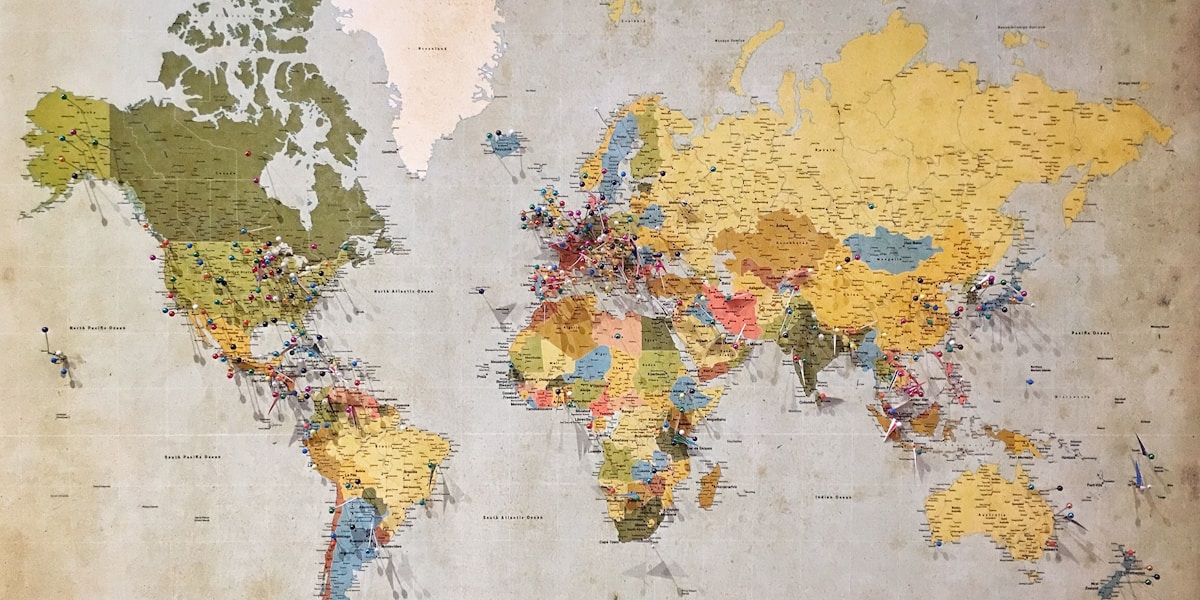
HD maps provide centimeter-level precision that enables reliable autonomous vehicle localization and navigation.
Localization and Environmental Understanding
Perhaps the most critical function of HD maps is enabling precise localization. GPS provides position accuracy of several meters—adequate for navigation apps but dangerously imprecise for lane keeping. Autonomous vehicles need to know their position within centimeters to stay safely within lanes and execute precise maneuvers.
HD maps enable map-based localization, where the vehicle matches sensor observations against mapped features to determine its exact position. Lidar point clouds are compared against mapped 3D geometry. Camera images are matched against mapped lane markings and signs. By finding the position that best aligns sensor data with map data, the vehicle achieves centimeter-level accuracy even when GPS is degraded or unavailable.
This precise localization enables confident environmental understanding. When the vehicle knows exactly where it is relative to the map, it knows exactly where lanes, boundaries, and obstacles should be. It can distinguish between a vehicle legally in an adjacent lane and one illegally crossing into its lane. It can anticipate upcoming curves, intersections, and lane changes. This spatial certainty is fundamental to safe autonomous operation.
Maps also provide environmental context that sensors cannot capture. The map knows that a particular intersection has a protected left turn phase, that a road segment passes through a school zone, that a highway exit requires crossing multiple lanes. This contextual understanding enables appropriate planning and behavior that would be impossible to derive from sensor data alone.
The Dynamic World Problem
The world doesn't stand still. Roads are repaved, lanes are restriped, construction zones appear and disappear, new signs are installed, old ones are removed. This constant change creates a fundamental tension: maps provide valuable prior knowledge, but that knowledge becomes outdated as the world changes.
When map and reality diverge, autonomous vehicles face difficult situations. A new construction zone not in the map may block expected lanes. A restriped intersection may have different lane configurations than mapped. A removed sign may cause the vehicle to expect rules that no longer apply. These discrepancies can confuse the system and potentially cause unsafe behavior.
Handling map-reality discrepancies requires sophisticated change detection. The vehicle must recognize when sensor observations don't match map expectations and respond appropriately. Sometimes this means trusting sensors over the map; sometimes it means proceeding cautiously until the situation clarifies. Getting this balance right is challenging—too much map trust ignores real changes, too little map trust abandons the benefits of prior knowledge.
The dynamic world problem is particularly acute in areas with frequent changes. Urban environments with ongoing construction, seasonal road changes, and temporary traffic patterns challenge map-dependent systems. Rural areas with less frequent updates may have maps that diverge significantly from current conditions. No environment is truly static, making map currency a persistent concern.
The Map Update Challenge
Keeping HD maps current is enormously challenging. Traditional mapping requires specialized vehicles to drive every road, collecting sensor data that is then processed into map format. This process is expensive, time-consuming, and must be repeated whenever roads change. For a company operating in multiple cities, the mapping burden is substantial.
The scale of the update challenge is daunting. Roads change constantly—not just major construction but minor restriping, sign replacements, and signal timing changes. Capturing all these changes quickly enough to maintain map accuracy requires either frequent re-mapping (expensive) or alternative update mechanisms. Neither solution is fully satisfactory with current technology.
Crowdsourced mapping offers a potential solution. Production vehicles equipped with sensors can detect changes and report them to update maps. Tesla's fleet, for example, could theoretically contribute to map updates as vehicles drive. However, crowdsourced mapping introduces quality control challenges—how do you verify that reported changes are real and accurate? False positives could corrupt maps; missed changes leave maps outdated.
The map update challenge influences deployment strategies. Companies like Waymo operate in limited geographic areas where they can maintain high-quality maps through dedicated mapping efforts. Expanding to new areas requires significant mapping investment before service can begin. This constraint explains why autonomous vehicle services remain geographically limited despite years of development.
Some companies have pursued map-light approaches that reduce dependence on detailed prior maps. Tesla's vision-based system aims to navigate with minimal map dependence, relying more heavily on real-time perception. This approach avoids the mapping burden but faces greater perception challenges. The industry hasn't reached consensus on the optimal balance, and different approaches may prove suitable for different use cases. What's clear is that the map update challenge remains a significant obstacle to widespread autonomous vehicle deployment, requiring either massive mapping infrastructure or breakthrough perception capabilities that reduce map dependence.