Despite the marketing promises and impressive demonstrations, today's most advanced consumer vehicles with autonomous features still require human drivers to remain alert and ready to take control at any moment. This isn't a temporary limitation that will be solved with the next software update—it reflects fundamental constraints in current autonomous technology that make human supervision essential for safe operation. Understanding why this supervision is necessary helps drivers use these systems safely and sets realistic expectations for the technology's capabilities.
The Phenomenon: L2/L3 Systems Still Require Drivers
Walk into any Tesla showroom and you'll hear about "Full Self-Driving" capability. Mercedes-Benz advertises its Drive Pilot system as allowing hands-free driving. GM's Super Cruise promises a "truly hands-free driving experience." Yet read the fine print, and every one of these systems requires the human driver to remain attentive and ready to take control immediately. Even Mercedes' Level 3 system, one of the most advanced commercially available, only works under specific conditions and requires the driver to resume control within seconds when prompted.
This requirement isn't arbitrary caution or legal hedging—it reflects the genuine limitations of current technology. These systems can handle many routine driving situations competently, but they lack the ability to handle every situation they might encounter. When the system reaches the edge of its capabilities, a human must be ready to take over. The question of why this is necessary reveals deep truths about the current state of autonomous driving technology.
The gap between marketing language and technical reality has created dangerous confusion among consumers. Studies show that many drivers overestimate the capabilities of their vehicles' autonomous features, leading to inappropriate use and tragic accidents. Understanding the genuine reasons for human supervision requirements isn't just academic—it's essential for safe operation of these vehicles.
Human Misunderstanding of "Automatic"
The word "automatic" carries powerful connotations. When we hear that a car can drive itself, we naturally imagine a system that handles everything—a robotic chauffeur that requires no human involvement. This mental model is reinforced by science fiction, by optimistic industry predictions, and by marketing that emphasizes capability while downplaying limitations.
But current autonomous systems are not automatic in the way humans intuitively understand the term. They are sophisticated driver assistance systems that can handle specific, well-defined situations but require human oversight for everything else. The distinction between "can drive itself in certain conditions" and "can drive itself" is crucial but easily lost in casual conversation and marketing materials.
This misunderstanding is compounded by the systems' competence in normal conditions. A driver who uses Tesla's Autopilot for hundreds of miles of uneventful highway driving naturally develops confidence in the system. That confidence can become dangerous when the system encounters a situation it cannot handle—a situation that may look routine to the human but falls outside the system's training or capabilities. The very success of these systems in normal operation makes their failures more surprising and dangerous.

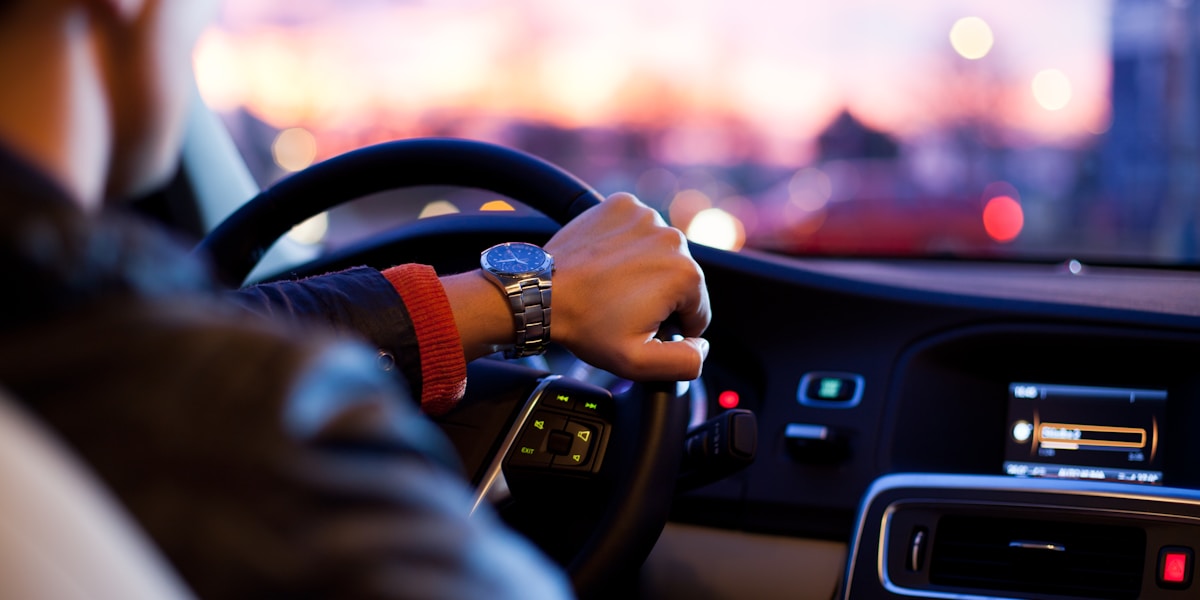
Modern autonomous driving displays can create a false sense of security, leading drivers to overestimate system capabilities.
Sources of System Uncertainty
Autonomous driving systems operate under constant uncertainty. Their sensors provide imperfect information about the world. Their algorithms make probabilistic predictions about what other road users will do. Their maps may not reflect recent changes to the road environment. This uncertainty is not a bug that can be fixed—it's an inherent characteristic of operating in a complex, dynamic world.
Sensor limitations create uncertainty at the most fundamental level. Cameras can be blinded by direct sunlight or confused by unusual lighting conditions. Radar can misinterpret metal objects or miss non-metallic obstacles. Lidar can be degraded by rain, snow, or dust. Even when sensors work perfectly, they provide incomplete information—they cannot see around corners, through obstacles, or into the intentions of other drivers.
Algorithmic uncertainty compounds sensor limitations. Machine learning models that interpret sensor data are trained on finite datasets that cannot capture every possible situation. When these models encounter situations outside their training distribution, their outputs become unreliable. The system may confidently misidentify an object, fail to detect a hazard, or make incorrect predictions about other vehicles' behavior. These failures are often unpredictable—the system provides no warning that it's operating outside its competence.
Environmental uncertainty adds another layer of complexity. Road conditions change due to weather, construction, accidents, and countless other factors. Maps become outdated as roads are modified. Traffic patterns vary by time of day, day of week, and season. The system must operate in a world that is constantly changing in ways that may not be reflected in its training data or maps.
The Cognitive Challenge of Human Takeover
Even if autonomous systems could perfectly identify when they need human intervention, the handoff itself presents serious challenges. Humans are not designed to monitor automated systems for extended periods and then suddenly take control in an emergency. This "out-of-the-loop" problem is well-documented in aviation, where autopilot systems have contributed to accidents when pilots failed to respond appropriately to automation failures.
When a driver is not actively engaged in driving, their situational awareness degrades rapidly. They may not notice changes in traffic patterns, road conditions, or the behavior of nearby vehicles. When suddenly asked to take control, they must first understand the current situation before they can respond appropriately. This process takes time—time that may not be available in an emergency.
Research shows that drivers using autonomous features often engage in secondary tasks—checking phones, reading, or even sleeping. Even drivers who try to remain attentive find their attention wandering after extended periods of monitoring. The human brain is simply not optimized for the task of passively supervising an automated system while remaining ready for instant action.
The irony is profound: the better the autonomous system performs in normal conditions, the harder it becomes for humans to maintain the vigilance needed to handle abnormal conditions. Success breeds complacency, and complacency breeds danger. This is not a problem that can be solved with better driver monitoring systems or more insistent warnings—it's a fundamental limitation of human cognition.
Current Technology's Capability Boundaries
Today's autonomous driving systems have well-defined capability boundaries, even if those boundaries are not always clearly communicated to users. Understanding these boundaries is essential for safe operation. Level 2 systems like Tesla's Autopilot and GM's Super Cruise can maintain lane position and following distance on well-marked highways, but they cannot handle intersections, construction zones, or many other common driving situations.
Level 3 systems like Mercedes' Drive Pilot expand these boundaries somewhat, allowing hands-free operation in traffic jams on mapped highways. But even these advanced systems have strict operational limits: specific speed ranges, weather conditions, road types, and geographic areas. Step outside these limits, and the system requires human takeover.
The boundaries exist because current technology cannot reliably handle the full complexity of driving. Perception systems struggle with unusual objects, adverse weather, and degraded road markings. Decision-making algorithms cannot anticipate every possible behavior from other road users. The systems lack the common-sense reasoning that allows humans to handle novel situations safely. Until these fundamental limitations are overcome, human supervision will remain necessary.
Some situations that current systems cannot handle include: construction zones with temporary lane markings, emergency vehicles approaching from unexpected directions, debris in the roadway, pedestrians or cyclists behaving unpredictably, faded or missing lane markings, unusual intersection configurations, and adverse weather conditions. The list is long and constantly evolving as systems improve, but the fundamental need for human backup remains.
What This Means for Users
For drivers of vehicles with autonomous features, understanding the need for human supervision has practical implications. First and most importantly, these systems should be used as driver assistance tools, not as replacements for human attention. The driver remains responsible for the safe operation of the vehicle at all times, regardless of what autonomous features are engaged.
Second, drivers should understand the specific capabilities and limitations of their vehicle's systems. This means reading the owner's manual, understanding the operational design domain, and recognizing situations where the system may struggle. Different systems have different capabilities, and assumptions based on one system may not apply to another.
Third, drivers should resist the temptation to become complacent. The fact that a system has worked flawlessly for thousands of miles does not mean it will handle the next situation correctly. Maintaining vigilance is difficult but essential. If you find yourself unable to remain attentive while using autonomous features, it's safer to disable them and drive manually.
Finally, drivers should advocate for clearer communication about system capabilities. The current state of marketing and naming for autonomous features is confusing and potentially dangerous. Terms like "Full Self-Driving" and "Autopilot" create expectations that the technology cannot meet. Pressure from informed consumers can help push the industry toward more honest communication about what these systems can and cannot do.
The need for human supervision in current autonomous vehicles is not a failure of the technology—it's an honest acknowledgment of its current limitations. As the technology improves, these limitations will gradually recede. But for now, the human driver remains an essential component of the system, and understanding why helps ensure that these powerful tools are used safely and appropriately.